
When do you think you will buy a 100% pure electric vehicle?

When will you buy a 100% pure electric vehicle?

  • Already Own One

    Votes: 72 8.1%
  • In the next year

    Votes: 7 0.8%
  • Between 1-5 years

    Votes: 163 18.4%
  • 6-10 years

    Votes: 189 21.3%
  • 10+ years or never

    Votes: 455 51.4%

  • Total voters
    886
  • Haha
Reactions: BigTurk
I was leaning towards the BMW iX3, but this R2 will cost about $15k less when similarly equipped. I really wish Des Moines had a service center.
 
  • Like
Reactions: FinalFourCy
I was leaning towards the BMW iX3, but this R2 will cost about $15k less when similarly equipped. I really wish Des Moines had a service center.
My guess is that DM and Council Bluffs will in the next couple of years.
 
Saw the first big negative on reddit. Someone was doing a test drive and the r2 "bricked". They came out and tried to fix it but couldn't get the issue resolved. The test driver said he still plans on buying one. How reliable has the R1 been?
 
Not fully electric, but brought home a 26 Maverick Hybrid on Monday. Loving it so far.

Wife will probably go EV or PHEV on next car. Probably try to hold her off another 3 years now, so will be interesting to see where the tech goes by then.20260608_193213.jpg
 
The move to solid state batteries continues. It's probably still years away from scaling towards being in most cars or affordable, but it's a step in the right direction.


Based on stuff I follow, solid-state and sodium (cold friendly) batteries are pretty close. It's pretty crazy how quickly battery tech is developing. Part of the reason as a single person, I'm not in a hurry to buy an EV.

Unfortunately, due to geo-political issues, tariff policy and Detroit's fumbling of initial manufacturing push in the US, the "still years" may be a US problem. But "years" might only be 2030.
 
Saw the first big negative on reddit. Someone was doing a test drive and the r2 "bricked". They came out and tried to fix it but couldn't get the issue resolved. The test driver said he still plans on buying one. How reliable has the R1 been?
I know three people with R1, and have not heard any abnormal reliability
Based on stuff I follow, solid-state and sodium (cold friendly) batteries are pretty close. It's pretty crazy how quickly battery tech is developing. Part of the reason as a single person, I'm not in a hurry to buy an EV.

Unfortunately, due to geo-political issues, tariff policy and Detroit's fumbling of initial manufacturing push in the US, the "still years" may be a US problem. But "years" might only be 2030.


2030 would be incredibly early for any production line, let alone alone supporting infrastructure
 
Based on stuff I follow, solid-state and sodium (cold friendly) batteries are pretty close. It's pretty crazy how quickly battery tech is developing. Part of the reason as a single person, I'm not in a hurry to buy an EV.

Unfortunately, due to geo-political issues, tariff policy and Detroit's fumbling of initial manufacturing push in the US, the "still years" may be a US problem. But "years" might only be 2030.
What does being single impact?
 
What does being single impact?
I have 1 car. If I buy an EV in 2026, in 2030 or 2035 that EV will still have 300 miles of range and take 45 minutes plus to charge to capacity. So why not wait 4 years or so and buy an EV that will get 500+ miles of range and charge to capacity in 10-20 minutes.

Sure I could buy an EV today and then sell when battery tech reaches the 500/20 performance points I mention and buy a new EV. But if battery performance develops as quickly as I think, then the 2026 model EV will take a resale hit. Sure there will still be a market for 2026 EV's as people's 2nd car (town driver), but like I said resale won't be great impacting TCO.
 
I have 1 car. If I buy an EV in 2026, in 2030 or 2035 that EV will still have 300 miles of range and take 45 minutes plus to charge to capacity. So why not wait 4 years or so and buy an EV that will get 500+ miles of range and charge to capacity in 10-20 minutes.

Sure I could buy an EV today and then sell when battery tech reaches the 500/20 performance points I mention and buy a new EV. But if battery performance develops as quickly as I think, then the 2026 model EV will take a resale hit. Sure there will still be a market for 2026 EV's as people's 2nd car (town driver), but like I said resale won't be great impacting TCO.

1. If you don't plan on buying a car, don't buy any car.

2. "why not wait 4 years or so and buy an EV that will get 500+ miles of range and charge to capacity in 10-20 minutes." Because in 2030, this won't exist. You're not going to be able to buy a vehicle with 500 miles of range for the same price as a 300 mile range car from today. The chargers won't exist that charge at that speed.

3. How many days a year do you drive over 250-300 miles in one day? Are you willing to add $15k to the price of a vehicle for that edge use case?

4. Resale hit. If some magic 500 mile BEV hits the market for a reasonable price, you should be more worried about the resale value of your ICE vehicle. This is like someone with a blackberry worrying about the resale value of their iphone 16 compared to the iphone 21.

Maybe you can't charge at home, maybe you do a lot of 250+ mile trips each year, etc. and then maybe waiting for that magical solid state battery that's been promised for the last 20 years is your best bet. IMO for the majority of people, a BEV makes sense right now if they are shopping for a new vehicle.
 
Ford has it's $30k (allegedly) EV truck running around in camoflage now.
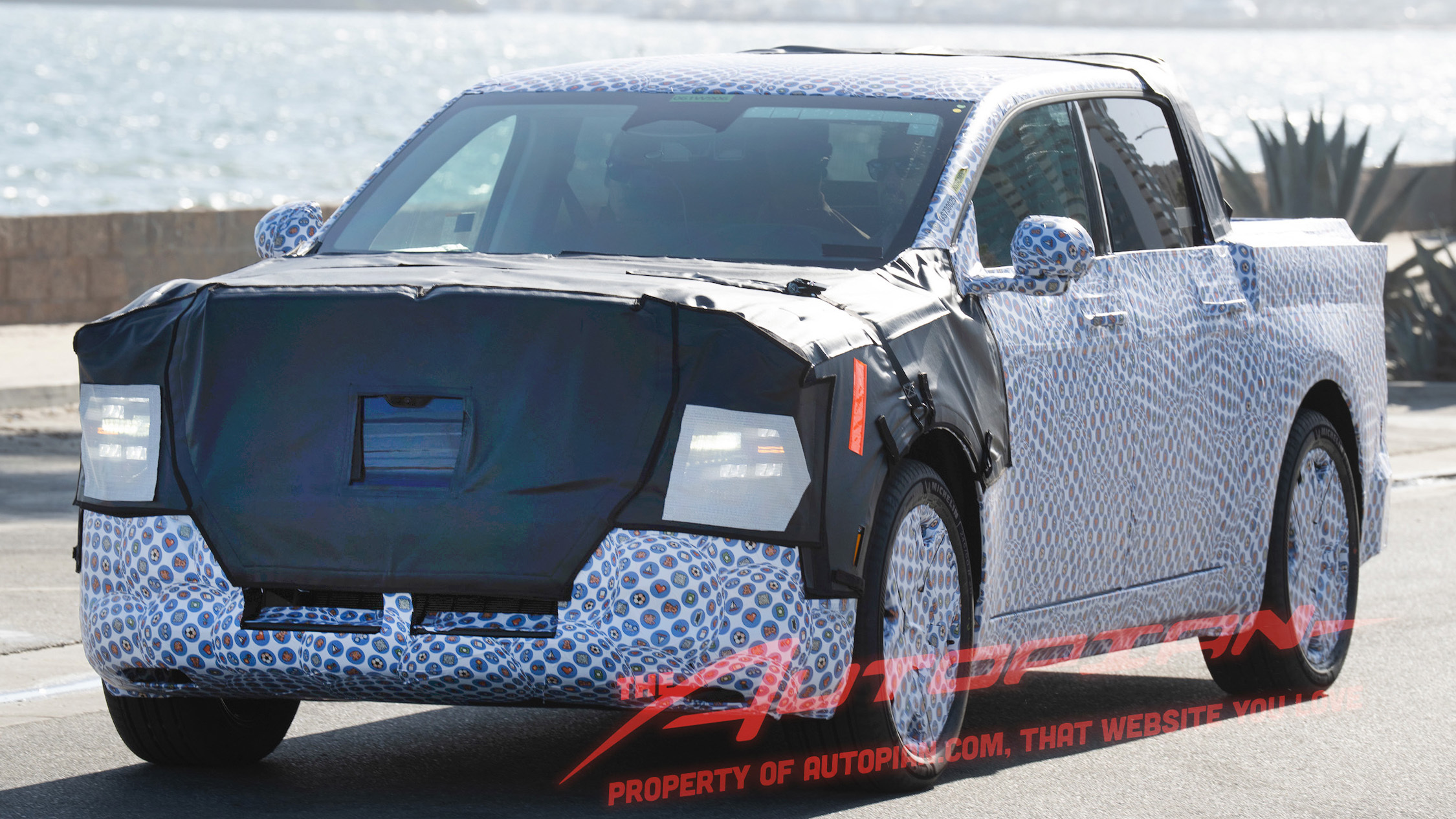
The biggest complaint I've heard with some of the mid-size trucks (Ranger, Colorado, Tacoma) was that the rear seat legroom wasn't enough and cost wise, it wasn't much different than a full-size.

Making it more affordable and more rear seat leg room is a big appeal. I think these could sell really well.
 
The biggest complaint I've heard with some of the mid-size trucks (Ranger, Colorado, Tacoma) was that the rear seat legroom wasn't enough and cost wise, it wasn't much different than a full-size.

Making it more affordable and more rear seat leg room is a big appeal. I think these could sell really well.
Where do you see more rear seat legroom? I only saw this

Other details visible through the camouflage include a relatively narrow cabin that places occupants closer together than most modern trucks,
 
The biggest complaint I've heard with some of the mid-size trucks (Ranger, Colorado, Tacoma) was that the rear seat legroom wasn't enough and cost wise, it wasn't much different than a full-size.

Making it more affordable and more rear seat leg room is a big appeal. I think these could sell really well.

We have Colorado's for work pool vehicles, and there's no way anybody could sit behind me while driving. Not even my 7 year old.

My Silverado is good for another few years, and I'd consider a Rivian, but i think they'd the same in that department :(
 
We have Colorado's for work pool vehicles, and there's no way anybody could sit behind me while driving. Not even my 7 year old.

My Silverado is good for another few years, and I'd consider a Rivian, but i think they'd the same in that department :(
R2 rear legroom 40.4 inches.

Colorado 34.7

Silverado crew cab 43.4. Double cab 35.2.


Although legroom doesn't tell the whole story. Some EV seats sit pretty low because of the flat floor.
 
We have Colorado's for work pool vehicles, and there's no way anybody could sit behind me while driving. Not even my 7 year old.

My Silverado is good for another few years, and I'd consider a Rivian, but i think they'd the same in that department :(
I'm not ruling out the possibility that you're 9 feet tall, but we've done a number of trips in my Colorado with a 20 year old and a 12 year old. I wouldn't say it's roomy, but it's adequate.
 

Help Support Us

Become a patron