
When do you think you will buy a 100% pure electric vehicle?

When will you buy a 100% pure electric vehicle?

  • Already Own One

    Votes: 72 8.2%
  • In the next year

    Votes: 7 0.8%
  • Between 1-5 years

    Votes: 163 18.5%
  • 6-10 years

    Votes: 189 21.4%
  • 10+ years or never

    Votes: 452 51.2%

  • Total voters
    883
The slowly losing charge is kind of my point. With any batteries I’ve owned and they’ve obviously not been as technologically advanced as a Tesla or these other car batteries, the small drains and recharges or letting them drain down on their own and sitting can pretty much hammer them.
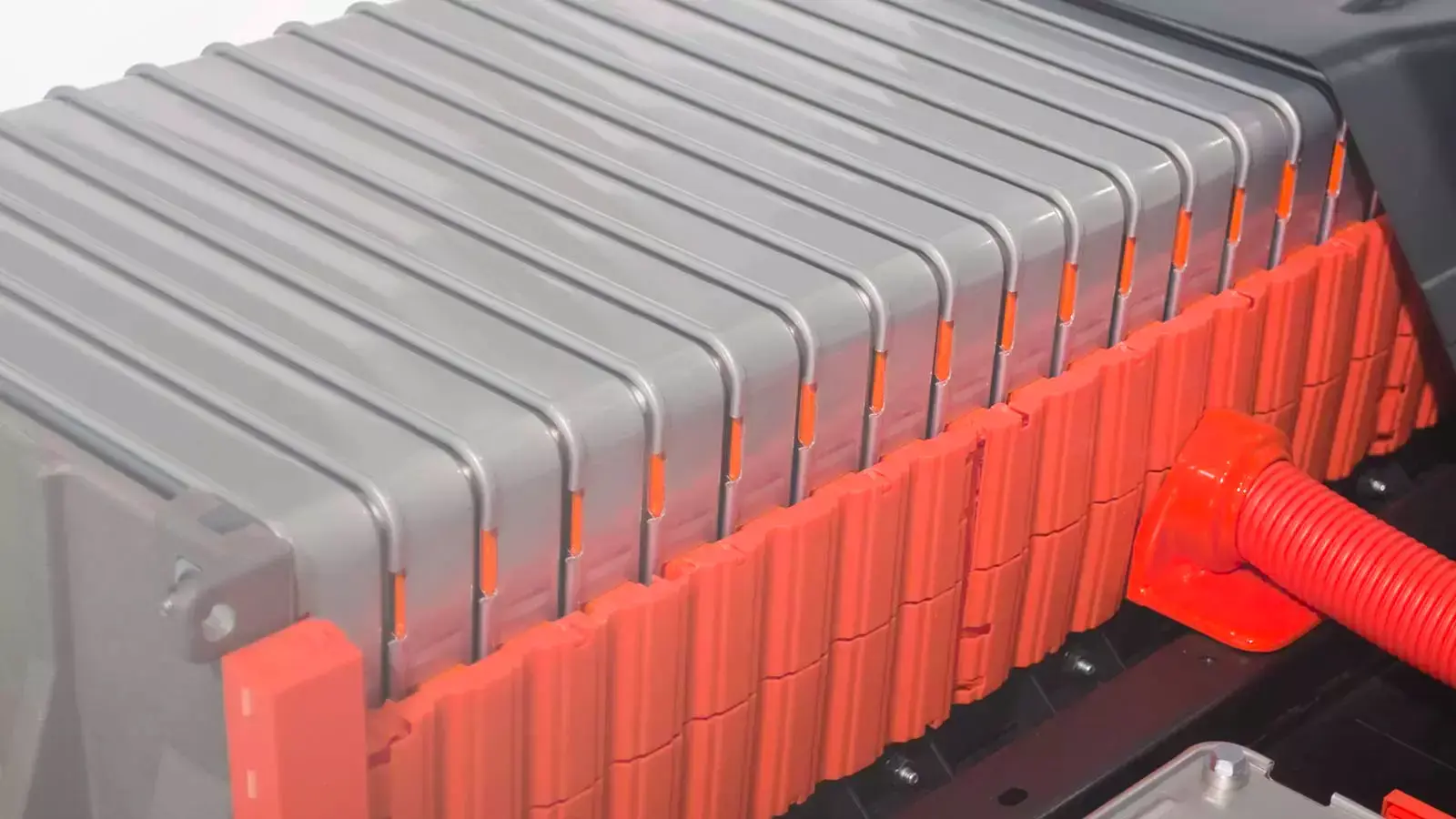
EVs have a ton of battery conditioning features for different use scenarios to improve the longevity of their batteries. If you can think of a scenario, the engineers have already come up with a conditioning routine.
 
I'm talking about the discrepancy in studies mostly (I've seen practically nobody uses it and I was a unicorn to 2/3 of people use it).

Street parkers should definitely know PHEV is pointless for them and you're probably right that filthy rich people probably don't care about it as much unless they are environmentalists.

Relevant questions to me:
- Among people with their own private charging how often do they use the feature?
- Among people with their own parking and sub $3 gas how often do they use the feature? (people who aren't saving much money)
- Among people with over $4 gas how often do they use it? (people who are saving a lot of money)

I'm very skeptical a middle class person with their own garage in California with $5/gallon gas is going to pay an extra $2-3000 for the PHEV model, and then chose to never use it and pay an extra $1000-1500 more on fuel a year and visit gas stations 3x more frequently for fun. Situationally I think consumers would be over the moon happy to use it and never forget, I can't be that rare of a person.

For me I would consider a PHEV again only because I know with my habbits it can be nearly an EV but with range of an ICE on roadtrips. I would likely not again consider just a hybrid after getting used to an EV.
Did you get the tax credit with that? Economically that impacted phev a lot. Many people bought Wrangler 4xe phevs just for that. Now they’re discontinued as that $7500 is gone.
I’d argue the people who have the situation you’re describing should just go bev.
 
Did you get the tax credit with that? Economically that impacted phev a lot. Many people bought Wrangler 4xe phevs just for that. Now they’re discontinued as that $7500 is gone.
I’d argue the people who have the situation you’re describing should just go bev.

That's very true too. It probably tips scales even more to someone really needing high gas/low electric rate for it to be a great economic proposition.

I got only partial on mine because the electric range wasn't quite long enough, but my MPG in gas mode was nearly 2x the 4xE (and still some decent AWD/clearance ability for my hiking trips) so I think I still made right choice and I liked the car. The 4xE got the full credit just barely if I remember correctly and at the time the Rav4 prime was easily the longest electric range PHEV with all wheel drive as an option.

My choice was like 5.5 years ago and EV options are wildly better now.
 
Actually box’s situation brings up a question. Good battery health general seems to be maintained by routinely using it to a lower % and then charging it. If someone rarely drops the battery under 80% and leaves it plugged in, is that rough on the battery and shorten its life?
That's pretty hard on batteries. You'd be far better off setting the charge limit to 80% and leaving it plugged in.
 
Good article on EV battery life data.

Two quotes I found especially interesting.

But based on their community, among EVs that are 10 years old or older, only 8.5% have ever had a battery replacement. More than 90% of them are still on their original battery.
This engineer has a Brock Samson twitchy eye after reading that. Mostly because 8.5% of them having a battery replaced means that 91.5% are on the original battery so why do they have to say more than 90% of them. I don't know why but that terrible writing makes me irrationally angry.

"Cars with 150,000 miles or more, and that have not had battery replacements, are getting at least 83% of their original range," Najman says.
 
Last edited:
  • Informative
Reactions: aobie and BoxsterCy
  • Like
Reactions: motorcy90
Good article on EV battery life data.

Two quotes I found especially interesting.


This engineer has a Brock Samson twitchy eye after reading that. Mostly because 8.5% of them having a battery replaced means that 91.5% are on the original battery so why do they have to say more than 90% of them. I don't know why but that terrible writing makes me irrationally angry.
To be fair, that is an NPR story, so it is written for listeners, not readers. So when a number is presented that might fly in the face of the conventional wisdom it might make sense to restate it in a slightly different way. Your listening audience doesn't have the luxury of going back and re-reading if they miss it or it doesn't quite make sense to them the first time around.
 
Good article on EV battery life data.

Two quotes I found especially interesting.


This engineer has a Brock Samson twitchy eye after reading that. Mostly because 8.5% of them having a battery replaced means that 91.5% are on the original battery so why do they have to say more than 90% of them. I don't know why but that terrible writing makes me irrationally angry.
Imagine losing basically 20% of range just because of age.
 
@Jer
I want to ride on this! I'm surprised I haven't seen it tooling around the RV lot next to JJ's motorized beer cooler.
Its a figure of speach in car communities for something thats more geard for comfort. Heated/cooled massage seats with large amounts of leg room.
 
Probably but not always. Some stations don’t have it. Always sub 20 now.
 
At what point do you need to start using Stabil in your gas with a PHEV?

For comparison, my daughter let a car sit for 2 years without running it. I was worried about the gas, but it ran fine. It was about half full.

The battery on the other hand was dead as a door nail. Took about 2 hours to get it charged enough to kick over.

H
 
If you get a PHEV, you'll know within a few months if you want your next car to be an EV.

My 2014 plugin hybrid is why I don't plan on buying an EV any time soon, nor another PHEV. I could originally go about 20 miles on a full charge. That has degraded to about 8 now. The drop off was most significant in the first few years, and has tapered off a bit over time.

I charge every night, mostly because this car has a parasitic draw on the 12 V starter battery that will drain it in about 2 days. Charging the big hybrid batteries also charges the little 12 V. In winter, I don't drive in EV mode. Instead, I leave my car running when I go somewhere, switch to EV mode, and just lock it. Stays nice and toasty and consumes about half the EV battery per hour.

I would not hesitate to buy another hybrid, but having AWD is higher priority. I might go with an AWD plug in hybrid if the full charge got me 50 miles or so, and the extra batteries did not come at the expense of other features. The batteries in my current car in are in the trunk, which cuts the space in half. Definitely not making that trade off again. I can barely get my golf clubs in the trunk.

H
 
Last edited:
  • Informative
Reactions: NWICY
I'm talking about the discrepancy in studies mostly (I've seen practically nobody uses it and I was a unicorn to 2/3 of people use it).

Street parkers should definitely know PHEV is pointless for them and you're probably right that filthy rich people probably don't care about it as much unless they are environmentalists.

Relevant questions to me:
- Among people with their own private charging how often do they use the feature?
- Among people with their own parking and sub $3 gas how often do they use the feature? (people who aren't saving much money)
- Among people with over $4 gas how often do they use it? (people who are saving a lot of money)

I'm very skeptical a middle class person with their own garage in California with $5/gallon gas is going to pay an extra $2-3000 for the PHEV model, and then chose to never use it and pay an extra $1000-1500 more on fuel a year and visit gas stations 3x more frequently for fun. Situationally I think consumers would be over the moon happy to use it and never forget, I can't be that rare of a person.

For me I would consider a PHEV again only because I know with my habbits it can be nearly an EV but with range of an ICE on roadtrips. I would likely not again consider just a hybrid after getting used to an EV.
We own a BEV Solterra that my wife drives. She loves it for the DSM metro, but said she doesn’t want another BEV when this lease is up. The range anxiety it causes just thinking of driving that to Chicago to see her dad is enough. Personally she is crazy because that is a drive she makes maybe twice a year. She wants a PHEV next time.
 

Latest posts

Help Support Us

Become a patron