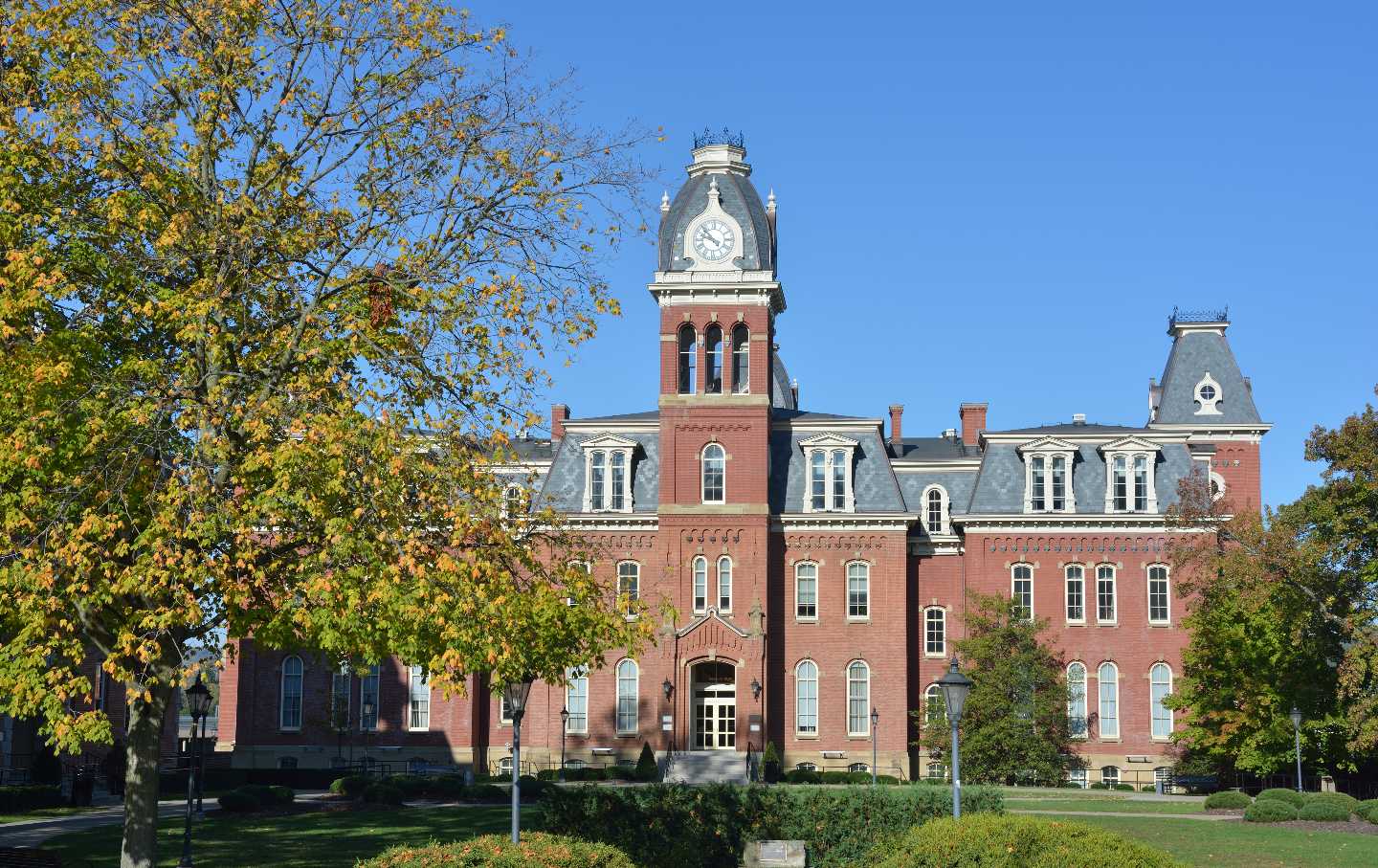
WVU Eliminating Degree Programs-Future of Higher Ed

I consider half of my college education practically worthless.
If I could only have taken 2 classes at ISU, MIS330 and MKT446, I would have gotten the maximum benefit because those 2 professors helped me so much. I taught myself sql, tableau, powerbi, and oracle from the guidance of said MIS professor. My MKT446 professor taught me how to properly read case studies and gave me advice of where to teach myself outside of class.

Oh, I majored in marketing and have a career in database development, risk modeling, and data visualization. None of what I took a class for besides MIS330 and that professor told me to learn all of these things to give myself a competitive advantage.
Agree except I might be a tad harsher. I have two degrees from Iowa State: BA Architecture and BS Comp Sci. Though I loved architecture, the relevant studies were virtually useless in the real world. I started to realize this my junior year. Accordingly, I went forward for the Comp Sci degree hoping to gain footage in Architecture via the Computer Graphics path. But, sadly, I was enormously premature in that thinking. My career funneled me into the Comp Sci direction.
That as a precursor, I can honestly say close to NOTHING from my studies enabled me in the real world. Except of course, my own initiative. I self taught myself whatever it took to do the job. I never took the path of 'certification' for my knowledge because honestly it was a waste of time in comparison to progressing forward on the task(s) at hand. Sure, in hindsight, it'd make soliciting a new job easier because, quite frankly, the 'system' of filtering in a job search is so rigid and doesn't place enough emphasis on initiative, creativity, ingenuity, and cost effectiveness. When I interviewed candidates for a job under me, I never tested their knowledge. Why? Because it'll be antiquated in a few years. I placed the highest emphasis on initiative to learn, dedication to quality, and ethics. So, when commenting on blue collar jobs, I have the utmost respect for them as most are self taught and, of course, due to government oversight self certified.
 
  • Winner
Reactions: Cfinnerty16


Interesting article on this topic. Pretty sad.
While I do believe a University does need to prune the trees on occasion what WVU is experiencing is horrific.

A few years ago the governor of Alaska slashed budgets for those state Universities and imposed what some here have suggested - the elimination of redundant programs between the different institutions. I cannot find anything about the outcome of such moves.

Back in the late '90s the University of Dubuque was facing huge budget shortfalls and eliminated about 2/3 of their majors. The fired faculty tried to sue but lost. UD then rebuilt and are now doing quite well financially. It is still an open question if their academics are any good.

I discussed this very thing with a colleague here at ISU when LAS Dean announced the reimagining of LAS and the elimination of some programs. Again, I think it is import to look critically at all programs and make necessary cuts even though that could be painful. I also think the LAS Dean has been horrible and absolutely does not understand what a liberal arts degree even means (she is a physicist who graduated through the German system). It isn't an easy process and needs to be handled with care. That didn't happen at ISU.

EDIT - When the LAS Dean is finally gone I do hope many/most of the Associate and Assistant Deans resign. There are way to many of them doing god knows what. I do wonder if any of the administrative bloat in LAS is getting looked at? Ah, who am I kidding.
 
Last edited:
  • Like
Reactions: Freebird
Did you read the programs being eliminated? Let's say they're not part of what most would consider a core curriculum.
Except, you know, for those that are majoring in the programs? Who are you to say what education is valuable for everyone or for society?
 
  • Dumb
Reactions: nfrine
Except, you know, for those that are majoring in the programs? Who are you to say what education is valuable for everyone or for society?
First encounter with this guy? He literally made up something not even listed in the article and then questions if I read it. I’m sure most of what he posts sounds really profound in his own head.
 
  • Like
Reactions: werdnamanhill
There it is. The entire reason to dismiss anything you say as unserious.
Somehow, private colleges don't suffer from those problems, yet still cost 2-3X as much as public. While also being microscopic in student population size. Apparently it's not just all about demand and administration.
 
Except, you know, for those that are majoring in the programs? Who are you to say what education is valuable for everyone or for society?
If any business is in financial trouble, a possible response is to focus on core competencies. There used to be general agreement on what constitutes a liberal arts education: history, language arts, sciences, logic and math. Now anything goes.
 
He literally made up something not even listed in the article and then questions if I read it.
The article said a major focus of the cuts was graduate-level language programs. As I said, most students won't even know those programs are gone. It's hardly the end of education at Morgantown.
 
Somehow, private colleges don't suffer from those problems, yet still cost 2-3X as much as public
Iowa Conference colleges have a continual struggle between giving financial aid to keep enrollments up and meeting there budgets. They generally try to create areas of excellence and focus recruiting on those areas.
 
Iowa Conference colleges have a continual struggle between giving financial aid to keep enrollments up and meeting their budgets. They generally try to create areas of excellence and focus recruiting on those areas.
Generally they focus on non D1 athletes and try to entice HS kids to keep playing.
 
Somehow, private colleges don't suffer from those problems, yet still cost 2-3X as much as public. While also being microscopic in student population size. Apparently it's not just all about demand and administration.
That’s their listed cost, the vast majority of students attending those schools don’t pay that full cost.
 
Generally they focus on non D1 athletes and try to entice HS kids to keep playing.
Iowa Conference colleges have a continual struggle between giving financial aid to keep enrollments up and meeting there budgets. They generally try to create areas of excellence and focus recruiting on those areas.
As a former D3 coach, both of these are true.
 
I took a class while I was at Iowa State with the Economics Professor who's dissertation was on college pricing. One of the exercises he had us do was to calculate the net present value of a college education. We found, and it is in line iwth his much more advanced paper on the topic, that even at today's usurious tuition prices, it is still financially an excellent decision to go to college and is one of the best investments one can make from a monetary perspective. This is of course, on average. Not all degrees and jobs pay as good as others. But especially back then your highschool teacher was speaking something stupid by not encouraging the kids he's teaching to make the best decision of their lives
Good ole Darin?
 
That’s their listed cost, the vast majority of students attending those schools don’t pay that full cost.
A majority of public students aren't paying 'full cost", either. I can tell you which ones are spending less on average.

If it was strictly about administration and student amenities, those schools with tiny enrollment should be vastly cheaper. They aren't.
 
I took a class while I was at Iowa State with the Economics Professor who's dissertation was on college pricing. One of the exercises he had us do was to calculate the net present value of a college education. We found, and it is in line iwth his much more advanced paper on the topic, that even at today's usurious tuition prices, it is still financially an excellent decision to go to college and is one of the best investments one can make from a monetary perspective. This is of course, on average. Not all degrees and jobs pay as good as others. But especially back then your highschool teacher was speaking something stupid by not encouraging the kids he's teaching to make the best decision of their lives

Was this a published dissertation? I’d like to know the name of the professor if it was.
 
A majority of public students aren't paying 'full cost", either. I can tell you which ones are spending less on average.

If it was strictly about administration and student amenities, those schools with tiny enrollment should be vastly cheaper. They aren't.
Can you back that stat up for public students? I have never heard anything like that before.
 
  • Like
Reactions: CycloneErik
This thread is long, and there are some good observations along with a lot of drek. Not going to opine on cutting programs (which may or may not be wise, depending). But one thing I would add here is that there imho the single biggest cause driving up costs is, ironically, an effort to make college more affordable.

Federal student loans.

Throwing money at the problem in this way creates 2 perverse incentives:
1) the state can cut funding and just let the feds give money to kids that in turn comes to the schools in state
2) the colleges can raise prices a lot because the students don't really care since payback is years away

Both of these in turn raise the overall cost to students. And the students are still on the hook for the cost - plus interest.

I struggled to find good data on student loan volumes, but here is one:
from 1995 to 2017 student debt increased from $187B to $1.4T. That's a 750% increase in 22 years (~10% annual, way more than inflation). Think that may have something to do with why college costs are also way above inflation.

You could argue that rising costs drive the loan amounts, but I truly think that is backwards. Think about it this way - if the feds ended student loan programs tomorrow, what would happen (after all the panic and angst that is)? Colleges would immediately look for ways to reduce and contain costs, so they could reduce charges to student to make sure they have enough students to cover those costs. Students would also immediately become a lot more price sensitive. The state would be forced to try to find more money for schools too.

I am not advocating ending all student loans, to be clear. Although some reductions/restrictions would be good (like don't let kids bury themselves with $100k debt for a lousy degree- make them do an ROI at least).
But how about this-- the Feds like to tie strings to money, so make it that only colleges that keep costs at or near core inflation are eligible for student loan funds. That would also incent the state to put more money in to lower costs, to leverage the federal money. Maybe I have not 100% thought this thru, but seems like that would create better incentives related to cost.

The current state is the feds write blank checks and we all wonder why both costs and student debt are going up.
 
  • Like
Reactions: FriendlySpartan
Can you back that stat up for public students? I have never heard anything like that before.
At least in the state of Iowa, you basically get an automatic scholarship if your GPA/ACT/SAT are good enough to any of our 3 public schools (ISU, U of I, UNI), at least when I went through. It’s basically formulaic.
 
At least in the state of Iowa, you basically get an automatic scholarship if your GPA/ACT/SAT are good enough to any of our 3 public schools (ISU, U of I, UNI), at least when I went through. It’s basically formulaic.
Huh that’s good to know, nothing like that in Michigan, unless it’s a newer program.

Edit* that is how it works for most private schools though
 
This thread is long, and there are some good observations along with a lot of drek. Not going to opine on cutting programs (which may or may not be wise, depending). But one thing I would add here is that there imho the single biggest cause driving up costs is, ironically, an effort to make college more affordable.

Federal student loans.

Throwing money at the problem in this way creates 2 perverse incentives:
1) the state can cut funding and just let the feds give money to kids that in turn comes to the schools in state
2) the colleges can raise prices a lot because the students don't really care since payback is years away

Both of these in turn raise the overall cost to students. And the students are still on the hook for the cost - plus interest.

I struggled to find good data on student loan volumes, but here is one:
from 1995 to 2017 student debt increased from $187B to $1.4T. That's a 750% increase in 22 years (~10% annual, way more than inflation). Think that may have something to do with why college costs are also way above inflation.

You could argue that rising costs drive the loan amounts, but I truly think that is backwards. Think about it this way - if the feds ended student loan programs tomorrow, what would happen (after all the panic and angst that is)? Colleges would immediately look for ways to reduce and contain costs, so they could reduce charges to student to make sure they have enough students to cover those costs. Students would also immediately become a lot more price sensitive. The state would be forced to try to find more money for schools too.

I am not advocating ending all student loans, to be clear. Although some reductions/restrictions would be good (like don't let kids bury themselves with $100k debt for a lousy degree- make them do an ROI at least).
But how about this-- the Feds like to tie strings to money, so make it that only colleges that keep costs at or near core inflation are eligible for student loan funds. That would also incent the state to put more money in to lower costs, to leverage the federal money. Maybe I have not 100% thought this thru, but seems like that would create better incentives related to cost.

The current state is the feds write blank checks and we all wonder why both costs and student debt are going up.
I really think this argument sounds good in theory but has little basis in reality.

The federal government created loan programs back in 1958, and then had other huge programs to federally back private student loans in 1965. Since the 60s we have gone back and forth between direct loans from the federal government OR allowing the federal government to back private loans (btw- the latter was the idea of Milton Friedman).

When you look at increases in tuition over time, they almost always coincide with economic recessions. I’m not going to sit here and tell you that 100% of all tuition increases are SOLELY because of cuts in state funding, but it’s certainly more tied to economic recessions and state spending than it is to availability of federal student loans.

I also am not trying to say that federal student loans are perfect, there are plenty of issues with them, and yeah, tuition is pretty out of control.

However, the blanket idea quoted by a lot of posters in this thread that somehow “the reason tuition increased is because the federal government is dumb” isn’t really accurate.

Is it probably true that colleges (especially now that cost burdens have shifted from states to individuals) rely on federal student loans? Yes. Is it true that middle management has increased in schools? Probably, yeah.. but fundamentally, tuition jumps aren’t because of greedy schools trying to fleece the unaware federal government, at least not most of the time.

I am not trying to say the federal government is infallible, and I don’t think that post secondary public education is in a great state, but I fundamentally disagree with the idea that it’s primarily because of the existence of federal student loans.
 

Help Support Us

Become a patron