I took a class while I was at Iowa State with the Economics Professor who's dissertation was on college pricing. One of the exercises he had us do was to calculate the net present value of a college education. We found, and it is in line iwth his much more advanced paper on the topic, that even at today's usurious tuition prices, it is still financially an excellent decision to go to college and is one of the best investments one can make from a monetary perspective. This is of course, on average. Not all degrees and jobs pay as good as others. But especially back then your highschool teacher was speaking something stupid by not encouraging the kids he's teaching to make the best decision of their livesI'll never forget having a teacher in high school in the early 2000s tell us that for a large percentage of people college isn't cost effective. Seemed crazy then, but I'll be damned if he wasn't on to something. Way too many people with 100k in debt working a 40k/year job that would have been much better off never getting a degree.
My wife doesn't have a college degree but has attained a very good job. I have an advanced degree and while I earn more than her, I imagine if you penciled it out she will net quite a bit more than me over her lifetime.


No forums found...
Site Related
Iowa State
College Sports
General - Non ISU
CF Archive
Install the app
How to install the app on iOS
Follow along with the video below to see how to install our site as a web app on your home screen.
Note: This feature may not be available in some browsers.
WVU Eliminating Degree Programs-Future of Higher Ed
- Thread starter wxman1
- Start date
No forums found...
Site Related
Iowa State
College Sports
General - Non ISU
CF Archive
You are using an out of date browser. It may not display this or other websites correctly.
You should upgrade or use an alternative browser.
You should upgrade or use an alternative browser.


“True terror is to wake up one morning and realize that your high school class is running the country.” - Kurt Vonnegut

Many entry-level jobs don't require a college degree but the guy with the degree has a easier time advancing into management. How many Walmart execs started as floor workers?Good luck nowadays getting in the door to any serious field with a completely unrelated degree. I’m a huge proponent of higher Ed but many of the majors people choose are not worth the cost and can very much limit their careers.
It's a mistake to make one-size-fits-all recommendations on this. Some people simply aren't college material. Other people have little to no interest in college and prefer to work in the trades.But especially back then your highschool teacher was speaking something stupid by not encouraging the kids he's teaching to make the best decision of their lives
It’s your own question so you give me that stat, more importantly give me a stat from the last decade.Many entry-level jobs don't require a college degree but the guy with the degree has an easier time advancing into management. How many Walmart execs started as floor workers?
Also show me these entry level jobs in good careers that don’t require a college degree. The running joke for years has been that entry level job requirements are insanely high.

I took a class while I was at Iowa State with the Economics Professor who's dissertation was on college pricing. One of the exercises he had us do was to calculate the net present value of a college education. We found, and it is in line iwth his much more advanced paper on the topic, that even at today's usurious tuition prices, it is still financially an excellent decision to go to college and is one of the best investments one can make from a monetary perspective. This is of course, on average. Not all degrees and jobs pay as good as others. But especially back then your highschool teacher was speaking something stupid by not encouraging the kids he's teaching to make the best decision of their lives
I'm 99% sure I know which professor you are referencing here.
The problem with this argument is that college (and I'm strictly speaking about college here, not things like early childhood education where basic literacy and numeracy comes about) doesn't so much create good jobs as control the distribution of them. College "sorts" or "signals" the upper tier of entry-level workers coming onto the labor market but doesn't have much impact on good-paying jobs being created.
It makes sense for an individual to take that bargain generally. That doesn't mean there is necessarily a social benefit to it, though, when individuals and society as a whole has to spend unholy amounts of time and money to level up their educational credentials to land a job that would have been there anyways.
This is less prevalent in the Midwest, but having lived on the East Coast previously for ~11 years, that sort of credential rat race is rampant out there. Jobs that in previous generations would have been easily worked by somebody with only a high school degree or maybe an undergraduate degree suddenly requiring a postgrad degree... even if the postgrad degree is in a field not whatsoever related to the actual job.
It’s hard to have these conversations in a vacuum because there’s so much nuance.
Sure, someone taking on 6 figures of debt for a degree with low earning potential is probably a bad investment for them.
On the other hand, someone in the richest country on the planet shouldn’t be shackled to lifelong debt because they had the aptitude and passion to pursue their desired field of study at the highest level. Public education is a service. It’s not supposed to be a business.
We are in a bad way if we have been so propagandized that life is boiled down solely to profitability instead of prosperity, ie a life full of wellness.
I want to live in a world where people with the intelligence and skills to design spaceships are designing spaceships and the people with the intelligence and skills to weld a boiler correctly are welding boilers. The training that leads to both fields might differ, but the opportunity to achieve both should be there and it should be affordable.
Sure, someone taking on 6 figures of debt for a degree with low earning potential is probably a bad investment for them.
On the other hand, someone in the richest country on the planet shouldn’t be shackled to lifelong debt because they had the aptitude and passion to pursue their desired field of study at the highest level. Public education is a service. It’s not supposed to be a business.
We are in a bad way if we have been so propagandized that life is boiled down solely to profitability instead of prosperity, ie a life full of wellness.
I want to live in a world where people with the intelligence and skills to design spaceships are designing spaceships and the people with the intelligence and skills to weld a boiler correctly are welding boilers. The training that leads to both fields might differ, but the opportunity to achieve both should be there and it should be affordable.

I consider half of my college education practically worthless.
If I could only have taken 2 classes at ISU, MIS330 and MKT446, I would have gotten the maximum benefit because those 2 professors helped me so much. I taught myself sql, tableau, powerbi, and oracle from the guidance of said MIS professor. My MKT446 professor taught me how to properly read case studies and gave me advice of where to teach myself outside of class.
Oh, I majored in marketing and have a career in database development, risk modeling, and data visualization. None of what I took a class for besides MIS330 and that professor told me to learn all of these things to give myself a competitive advantage.
If I could only have taken 2 classes at ISU, MIS330 and MKT446, I would have gotten the maximum benefit because those 2 professors helped me so much. I taught myself sql, tableau, powerbi, and oracle from the guidance of said MIS professor. My MKT446 professor taught me how to properly read case studies and gave me advice of where to teach myself outside of class.
Oh, I majored in marketing and have a career in database development, risk modeling, and data visualization. None of what I took a class for besides MIS330 and that professor told me to learn all of these things to give myself a competitive advantage.
Speaking of things driving up college costs, here's a fun anecdote. I work in higher ed as a librarian (username checks out) and a large publisher just acquired a smaller one. We were just informed that a package of journals that we were paying $144/yr for are now going to be priced at $200 per journal. Several of these journals are ones that we see regular/heavy use on, so we are looking at a 300-400% increase just right here, assuming we keep only those journals. The profits on these resources are obscene.

CycloneErik
Well-Known Member
Speaking of things driving up college costs, here's a fun anecdote. I work in higher ed as a librarian (username checks out) and a large publisher just acquired a smaller one. We were just informed that a package of journals that we were paying $144/yr for are now going to be priced at $200 per journal. Several of these journals are ones that we see regular/heavy use on, so we are looking at a 300-400% increase just right here, assuming we keep only those journals. The profits on these resources are obscene.
And the writers and reviewers involved still weren't paid. Journals have become such a scam.
Yup! I started to get into a whole thing about the peer-review process, that the creators aren't compensated, are essentially required to write in order to stay employed/career-advancement, the reviewers aren't paid, and then the publishers go back and sell this content to those very same institutions, but I just got tired. Anyway, seize the means of (academic content) production, comrades, or accept that there are other ways for faculty to prove they are learning/doing their jobs.And the writers and reviewers involved still weren't paid. Journals have become such a scam.

One thing that always gets overlooked in the cost of college, is that it’s usually 50% tuition/50% living costs. If someone doesn’t go to college, they have to pay their rent, utilities, and food. Why should that person now help pay for the basic living costs if someone going to college? The 21k a year for my kid to go to ISU isn’t just cost to attend the school, it’s for room and board also.
A college student can live on $1,000/month if they just need basics. My kids generally earned around 10k during summer internships living at home. That nearly covers their living costs during college. If they work 10 hours a week while taking 15 credits (very doable) for the 35 weeks, that gives them another 3-4K take home.
This cuts the cost down to 10-12k a year in tuition. No grants or scholarships have been factored in. Government gives you at least a 2k year tax credit for tuition, most kids will see at least another 2k in scholarships for the school year. That means loans shouldn’t be more than 10k a year ( I’m being conservative at every step). After 4 years a student should be maxed out at 40k in loans.
How people amass 100k plus in loans, usually means they are paying 0 attention to their finances.
A college student can live on $1,000/month if they just need basics. My kids generally earned around 10k during summer internships living at home. That nearly covers their living costs during college. If they work 10 hours a week while taking 15 credits (very doable) for the 35 weeks, that gives them another 3-4K take home.
This cuts the cost down to 10-12k a year in tuition. No grants or scholarships have been factored in. Government gives you at least a 2k year tax credit for tuition, most kids will see at least another 2k in scholarships for the school year. That means loans shouldn’t be more than 10k a year ( I’m being conservative at every step). After 4 years a student should be maxed out at 40k in loans.
How people amass 100k plus in loans, usually means they are paying 0 attention to their finances.

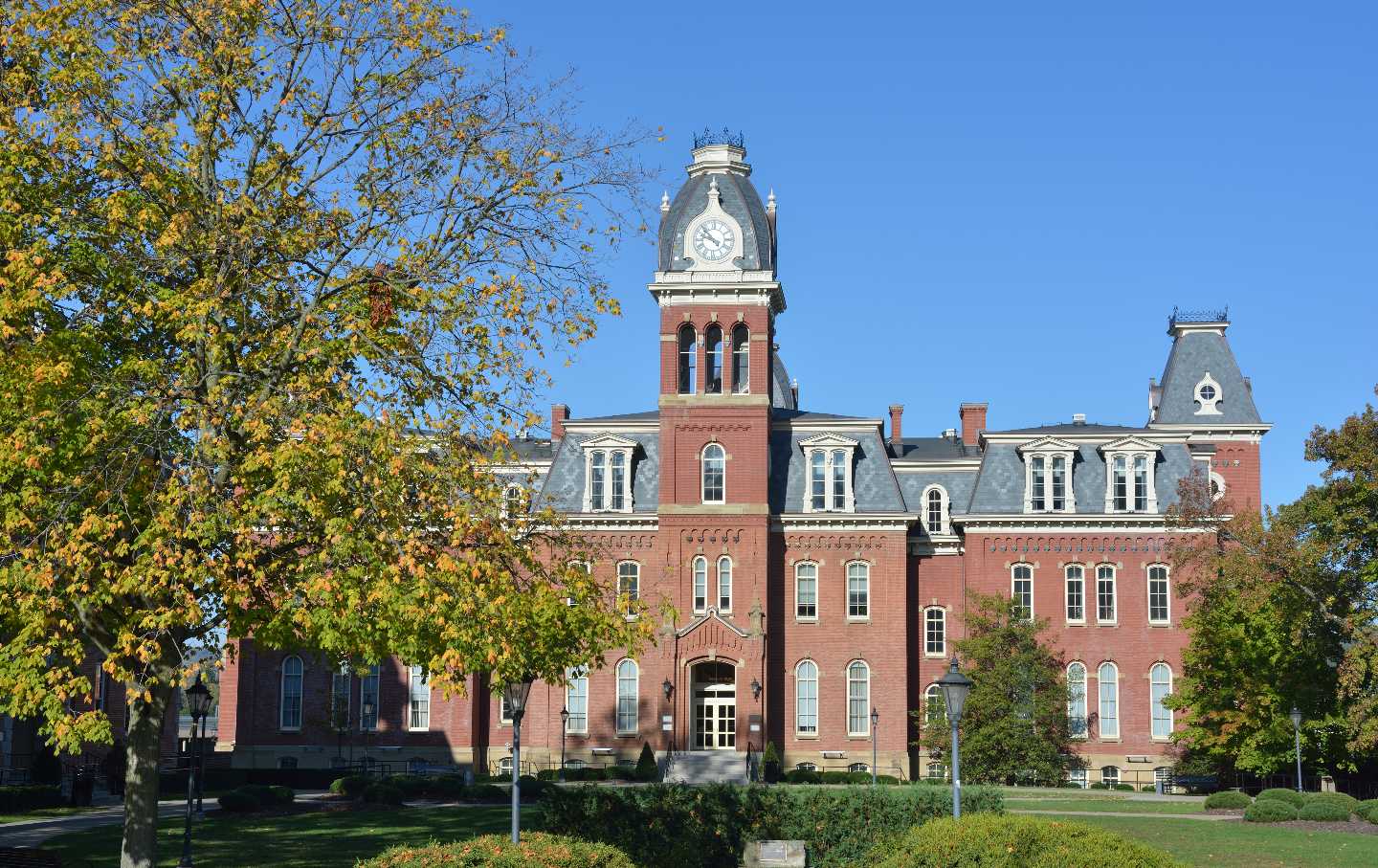
The Evisceration of a Public University
West Virginia University is being gutted, and it’s a preview for what’s in store for higher education.
 www.thenation.com
Interesting article on this topic. Pretty sad.
Very sad that the actual classroom will bear the worst of this while the economic and political systems that drove this will continue to fire away, looking for the next money maker.The Evisceration of a Public University
West Virginia University is being gutted, and it’s a preview for what’s in store for higher education.
Interesting article on this topic. Pretty sad.
Most companies with more than a few employees have both entry-level jobs and career-track management positions. The transition often requires a 4-year degree and the field of study is secondary.It’s your own question so you give me that stat, more importantly give me a stat from the last decade.
Also show me these entry level jobs in good careers that don’t require a college degree. The running joke for years has been that entry level job requirements are insanely high.
Yep. It’s by design. And the elites in the country aren’t sending their kids to apprentice to be a plumber or get a two year vocational degree. They want to ensure that the common man has no keys to the kingdom. State school was once an affordable class equalizer. So gut it and make it worthless.The Evisceration of a Public University
West Virginia University is being gutted, and it’s a preview for what’s in store for higher education.
Interesting article on this topic. Pretty sad.
There's a balance between training for a career and what it means to be an educated person. At one time, one would have had to have several courses in Latin to be considered educated. As a couple of people posted early on, higher education has gotten bloated: too many buildings, too many administrators, too many classes and majors. I won't hurt them to sharpen their focus and while they're at it, they might consider that making half the population political enemies may affect their support.I consider half of my college education practically worthless.
If I could only have taken 2 classes at ISU, MIS330 and MKT446, I would have gotten the maximum benefit because those 2 professors helped me so much. I taught myself sql, tableau, powerbi, and oracle from the guidance of said MIS professor.
I hardly think eliminating a graduate degree program in Russian literature will have a major effect on most students.Yep. It’s by design. And the elites in the country aren’t sending their kids to apprentice to be a plumber or get a two year vocational degree. They want to ensure that the common man has no keys to the kingdom. State school was once an affordable class equalizer. So gut it and make it worthless.
Nice strawman. Not engaging in a bad faith ridiculous argumentI hardly think eliminating a graduate degree program in Russian literature will have a major effect on most students.
There should be no political enemies to education. Yet...There's a balance between training for a career and what it means to be an educated person. At one time, one would have had to have several courses in Latin to be considered educated. As a couple of people posted early on, higher education has gotten bloated: too many buildings, too many administrators, too many classes and majors. I won't hurt them to sharpen their focus and while they're at it, they might consider that making half the population political enemies may affect their support.


