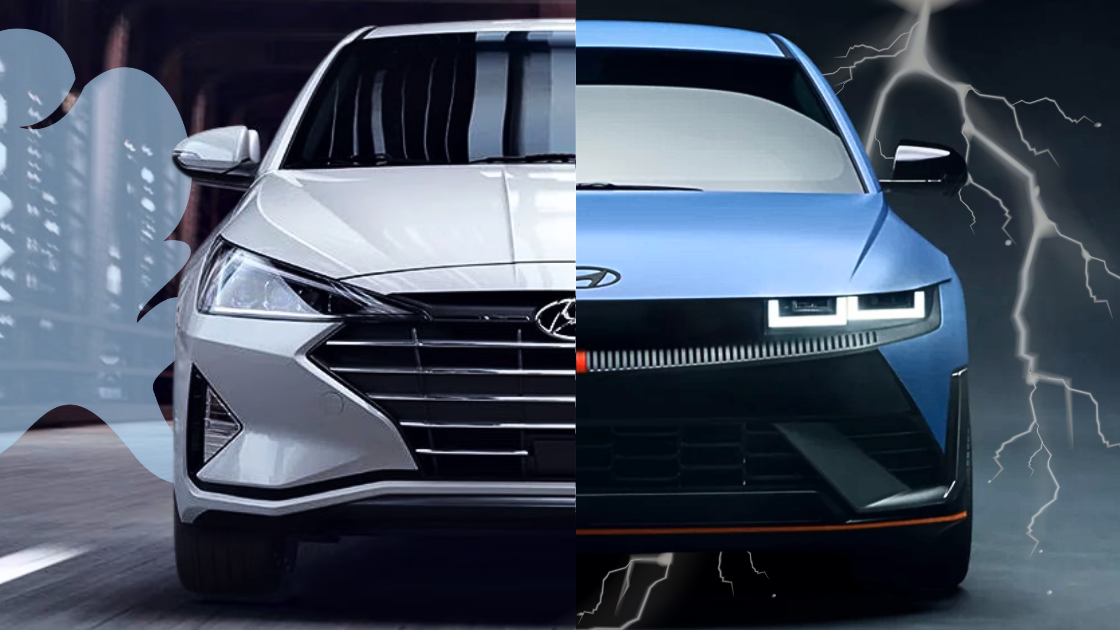
When do you think you will buy a 100% pure electric vehicle?

When will you buy a 100% pure electric vehicle?

  • Already Own One

    Votes: 72 8.1%
  • In the next year

    Votes: 7 0.8%
  • Between 1-5 years

    Votes: 163 18.4%
  • 6-10 years

    Votes: 189 21.4%
  • 10+ years or never

    Votes: 454 51.3%

  • Total voters
    885
Just as an example:

Last year, I used 3,804kWh, which I think was around 11k miles

It cost us $512
89% charging at Home(11 cents per kWh), 10% charging at Superchargers (36 cents per kWh). 3376kWh out of 3804kWh at home.

If I had a ICE vehicle that got 25mpg, it would have cost me $1602 at $3.70 gallon. $1,300 at $3 gallon

So, about $1,100 in fuel savings.

Of course that doesn't consider things like time saved by not pumping gas(especially in freezing weather), waiting for service, the cost of service, etc.

How much is the additional yearly registration on the electric that offsets what you would have paid in gas tax?
 
How much is the additional yearly registration on the electric that offsets what you would have paid in gas tax?
$130

Let's be real about the costs: the insurance is also higher than a comparable gas car. But here's the kicker: we didn't buy the Tesla to save money or the planet—we bought it because it offers a driving experience that simply no other ICE vehicle in its price range can touch. The high loyalty rate for BEVs isn't a fluke; it’s proof that once you own one, you get it
 
  • Funny
Reactions: simply1
$130

Let's be real about the costs: the insurance is also higher than a comparable gas car. But here's the kicker: we didn't buy the Tesla to save money or the planet—we bought it because it offers a driving experience that simply no other ICE vehicle in its price range can touch. The high loyalty rate for BEVs isn't a fluke; it’s proof that once you own one, you get it

I'm not necessarily disagreeing with any of this, just don't know why you'd do a cost comparison only using some of the total costs.
 
I'm not necessarily disagreeing with any of this, just don't know why you'd do a cost comparison only using some of the total costs.

It varies WILDLY depending on where you live. I’m on the extreme where a gas car is easily prohibitively expensive vs a comparable EV. My annual registration fee is like $350 more but my fuel is $1.10 equivalent vs average $5 gas. I’m saving thousands a year on fuel, my current car is a lease and you’d need to reduce my lease at least $200 a month for me to feel a gas car would not be more expensive for me. Iowa has among the cheapest gas in the country/world so it’s just not the same calculation.

Charging on long road trips is more expensive than at home but I also very often charge for free around town so 5x cheaper on fuel really is the reality for me. For an Iowan it might only be 1.5x cheaper or 2x cheaper to fuel depending on local electric rates.
 
I'm not necessarily disagreeing with any of this, just don't know why you'd do a cost comparison only using some of the total costs.
Because there are so many things to consider, and every vehicle is different.

For example, this year I'll probally spend $210 in my Kia on service. Next year, it hits 60k miles so it will probably be $500+.

On the other hand, the Tesla will probably burn tires at a faster rate.

On the other hand, I'll never need to replace brake pads on the Tesla.

Some people pay twice as much for electricity, Some people get 18mpg and some 40mpg in their ICE vehicles.

The original person was talking about charging prices, and I was trying to explain that fast charging prices are something people focus too much on when it comes to BEV's....IMO
 
I'm not necessarily disagreeing with any of this, just don't know why you'd do a cost comparison only using some of the total costs.
I keep track of my vehicle fuel and maintenance costs in the fuelly app. I was looking at everything from insurance to maintenance to fuel and registration. Assuming I only charge at home I was looking at pretty close to a $300/month savings if I traded in on that lightning I posted above. The problem was that I'm about 18 months from paying off my current truck and I didn't really want to extend that payment out longer. I hate having a payment.
 
I keep track of my vehicle fuel and maintenance costs in the fuelly app. I was looking at everything from insurance to maintenance to fuel and registration. Assuming I only charge at home I was looking at pretty close to a $300/month savings if I traded in on that lightning I posted above. The problem was that I'm about 18 months from paying off my current truck and I didn't really want to extend that payment out longer. I hate having a payment.
That Lightning is an absolute STEAL. If only my wife didn’t want a full size pickup I'd trade her Mach E in on it in a heartbeat. She would prefer something like the Rivian R1S or R1T.
 
  • Agree
Reactions: mramseyISU
As the batteries gain charge the speed slows down. Think of it like a parking lot. As the vehicles fill the stalls you have to slow down to find open stalls. Same thing with the batteries. If you took the battery to absolute 0 you could probably hit the 350 for a few minutes.

What is the battery pack size on the truck?
Preconditioning does make a difference too. They said they didnt precondition beforehand. Preconditioning can mean heating or cooling the battery depending on the current cell temp.
 
Because there are so many things to consider, and every vehicle is different.

For example, this year I'll probally spend $210 in my Kia on service. Next year, it hits 60k miles so it will probably be $500+.

On the other hand, the Tesla will probably burn tires at a faster rate.

On the other hand, I'll never need to replace brake pads on the Tesla.

Some people pay twice as much for electricity, Some people get 18mpg and some 40mpg in their ICE vehicles.

The original person was talking about charging prices, and I was trying to explain that fast charging prices are something people focus too much on when it comes to BEV's....IMO
Curious about the brake pad replacement comment. Is that due to heavy use of one-pedal driving?
 
That Lightning is an absolute STEAL. If only my wife didn’t want a full size pickup I'd trade her Mach E in on it in a heartbeat. She would prefer something like the Rivian R1S or R1T.
That thing is a screaming deal. My wife and I sat down and crunched a whole bunch of numbers looking at it the other night. Having mine paid off soon is the only thing that kept me from going to get it.
 
Curious about the brake pad replacement comment. Is that due to heavy use of one-pedal driving?
Correct, regenerative braking. They'll be times where I don't use the brakes for days. Most last beyond 100k miles, and even then it's more to do with corrosion rather than wear.

It's very weird at first when you've spent nearly 40 years driving cars that coast. But I love it once I got used to it. Going back and forth between cars is a little tricky at times. Once in a while, I'll step out of my Kia and it's still running :)
 
As the batteries gain charge the speed slows down. Think of it like a parking lot. As the vehicles fill the stalls you have to slow down to find open stalls. Same thing with the batteries. If you took the battery to absolute 0 you could probably hit the 350 for a few minutes.

What is the battery pack size on the truck?
Chevrolet has not publicly disclosed that information that I know of. I have heard that it is 212 kW.
 
A hyundai Ioniq 5 takes 18 minutes to go from 10 to 80%. It takes an additional 16 minutes to go from 80% to 100%. This is why, if you're concerned about time, you follow the guidance of the car. The first month we got the car and used a supercharger, we ignored the Tesla suggestions and charged to 90+%, which, looking back didn't make any sense for the road trip we were taking. I've come to trust the system.
 
  • Like
Reactions: DSMCy
Now that the manufacturing infrastructure is in place and most of the rest of the world is adopting electric the costs are coming down.

Probably and hopefully eventually, but average price is a weird way to measure. I know it's not exact but just looking at a couple EVs with ICE versions the Kona EV is $8k more, Equinox EV is $5k more, Blazer EV is $9k more.
 
I know Musk is always just throwing s*** out that may not be realistic but he recently called out using electric cars as supplements to data centers. Basically using the power in your car plus the minimal computing power as a piece of a distributed data center. If they paid users for the power/use to offset the cost of charging that could be pretty neat.