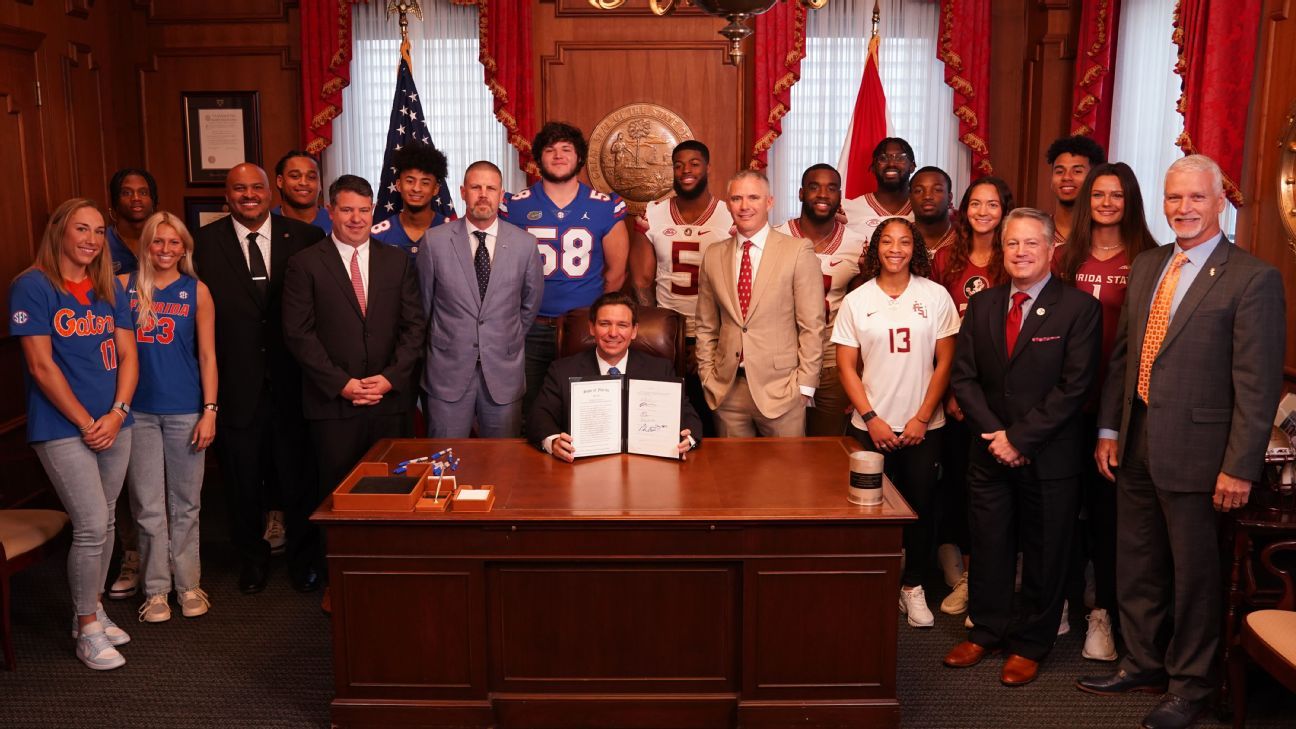
New Florida NIL Legislation

HawaiiClone

Well-Known Member
Dec 4, 2020
808
353
63

It seems like it might be possible for the NCAA to look at a small sampling of receipts at the huge money programs to see if payments to players are for actual name, image and likeness deals (as opposed to just handing players cash). At the same time, they could check to make sure that the NCAA rules and state laws that DO exist are being followed by each FBS program.
 
As with so many things.....trial lawyers gonna win..... Both sides of argument.

Florida man not donating to NIL. Nebraska man gonna buy a bowl.

Florida man is too busy siphoning gas to win a feud with a neighbor revolving around an MLB wild card game.
 
  • Haha
Reactions: dirtyninety
I realize this is happening at the state level and not federal, but it's just further evidence that the likelihood of the NCAA receiving statutory assistance in imposing restrictions on NIL rights remains pretty low.

Despite what may seem like overwhelming distaste for the current landscape, among fanbases like Iowa State, it doesn't appear that there's enough of an appetite, on a larger/national scale, to make changes to allow more oversight. And there are places, such as Florida, where they're actually moving towards fewer restrictions on schools/players, rather than more.

Long story short: Don't hold your breath, because help ain't coming.
 
I realize this is happening at the state level and not federal, but it's just further evidence that the likelihood of the NCAA receiving statutory assistance in imposing restrictions on NIL rights remains pretty low.

Despite what may seem like overwhelming distaste for the current landscape, among fanbases like Iowa State, it doesn't appear that there's enough of an appetite, on a larger/national scale, to make changes to allow more oversight. And there are places, such as Florida, where they're actually moving towards fewer restrictions on schools/players, rather than more.

Long story short: Don't hold your breath, because help ain't coming.

Question: does anyone know if any state has passed NIL laws to the full extent that the Alston ruling would allow? Or are there states that have gone beyond what the Alston ruling would allow? Either way, maybe the NCAA could be proactive and work within whatever the Supreme Court would allow to set up new standards for all of the NCAA schools and bypass getting congressional help. Just a thought.
 
Question: does anyone know if any state has passed NIL laws to the full extent that the Alston ruling would allow? Or are there states that have gone beyond what the Alston ruling would allow? Either way, maybe the NCAA could be proactive and work within whatever the Supreme Court would allow to set up new standards for all of the NCAA schools and bypass getting congressional help. Just a thought.
Alston wasn't really about NIL. It was about schools providing additional benefits to a student.
The current NIL landscape is more a result of states like Florida, California, and others who had passed laws that made it illegal for schools to prevent students from profiting from their name image and likeness. The NCAA had vowed to fight those laws, but Justice Kavanaugh's opinion that was part of the Alston decision, was effectively a warning shot at the NCAA letting them know that future cases brought to court, involving student athlete benefits, weren't likely to go in their favor. His opinion isn't legally binding, of course, but it was a very clear announcement that the NCAA shouldn't push their luck.

So with Kavanaugh's warning in mind, and the first of the state NIL laws going into effect in July of 2021, the NCAA issued the instruction to allow NIL.

So, to answer your question, Alston didn't really set any rules for NIL. It was more for what types of benefits schools could provide. Theoretically, a state could pass a law allowing for students to be paid directly by the schools, but I don't believe any state has done that yet, and it almost certainly would be challenged by the NCAA.
 
Alston wasn't really about NIL. It was about schools providing additional benefits to a student.
The current NIL landscape is more a result of states like Florida, California, and others who had passed laws that made it illegal for schools to prevent students from profiting from their name image and likeness. The NCAA had vowed to fight those laws, but Justice Kavanaugh's opinion that was part of the Alston decision, was effectively a warning shot at the NCAA letting them know that future cases brought to court, involving student athlete benefits, weren't likely to go in their favor. His opinion isn't legally binding, of course, but it was a very clear announcement that the NCAA shouldn't push their luck.

So with Kavanaugh's warning in mind, and the first of the state NIL laws going into effect in July of 2021, the NCAA issued the instruction to allow NIL.

So, to answer your question, Alston didn't really set any rules for NIL. It was more for what types of benefits schools could provide. Theoretically, a state could pass a law allowing for students to be paid directly by the schools, but I don't believe any state has done that yet, and it almost certainly would be challenged by the NCAA.


Thanks for that clarification I remember now how it was about student benefits.

It seems like for the health of Division 1 athletics the NCAA could be more proactive in regards to working with states and member schools to find a middle ground on student benefits. Otherwise, it seems like the top major programs could use the current wild atmosphere to further distance themselves from the rest of the Division 1 schools.
 
Thanks for that clarification I remember now how it was about student benefits.

It seems like for the health of Division 1 athletics the NCAA could be more proactive in regards to working with states and member schools to find a middle ground on student benefits. Otherwise, it seems like the top major programs could use the current wild atmosphere to further distance themselves from the rest of the Division 1 schools.
This is assuming that enough people (or the RIGHT people, more accurately) think it's unhealthy, and I'm not sure that they do. Do you think the majority of SEC schools have a problem with how NIL has played out? Or other blue bloods? It's not like it was an even playing field before. Schools aren't going to willingly give up an advantage.
 
This is assuming that enough people (or the RIGHT people, more accurately) think it's unhealthy, and I'm not sure that they do. Do you think the majority of SEC schools have a problem with how NIL has played out? Or other blue bloods? It's not like it was an even playing field before. Schools aren't going to willingly give up an advantage.

Yeah, true, but Division 1 might benefit from taking an MLS approach where the schools see themselves as partners in a business where every member needs to be part of the success of the league. It has helped MLS improve over past failures. Or maybe Division 1 is just too bloated with the lower level schools having too few resources to reasonably keep up with the top schools. Either way, the NCAA Men's Basketball Tourney and other sports' tourneys are better when there isn't too much of a gap between the have mores and have lesses.
 
Yeah, true, but Division 1 might benefit from taking an MLS approach where the schools see themselves as partners in a business where every member needs to be part of the success of the league. It has helped MLS improve over past failures. Or maybe Division 1 is just too bloated with the lower level schools having too few resources to reasonably keep up with the top schools. Either way, the NCAA Men's Basketball Tourney and other sports' tourneys are better when there isn't too much of a gap between the have mores and have lesses.
MLS is pretty unique in the sports world as far as business models go, no way that could be implemented in the NCAA.
If you could convince the power teams of that, we wouldn’t be consolidating into a P2.
 
MLS is pretty unique in the sports world as far as business models go, no way that could be implemented in the NCAA.
If you could convince the power teams of that, we wouldn’t be consolidating into a P2.
It could be a matter of degree. I was thinking that with basketball, if too many schools are too far behind in getting high quality players, the tournament will have too few upsets and there will be less interest in early round games from fans who don't have a rooting interest (and sometimes even ones who do have a rooting interest).
 
How does this law do anything? If I am a booster playing thousands or millions to a player of course I'll give them a receipt/agreement/contract saying the payment was for name, image and likeness.
 

Latest posts

Help Support Us

Become a patron