Wonder if the fact the moon only rotates once every 27-28 days complicates things.The comms issue is a simple yet complicated answer at the same time. We don't have any satellites that are in orbit around the moon. We do have a network of comm satellites in orbit around earth that the ISS uses now and the shuttle used back in the day but, soon after the TLI burn the other day, Artemis 2 was out of range of those.
They switched to the DSN (Deep Space Network) Here is some info on it from google:
..... (DSN) is NASA's international array of giant radio antennas—located in California, Spain, and Australia—that provides 24/7, two-way communication, navigation, and tracking for solar system exploration spacecraft. Managed by JPL, these 70-meter and 34-meter antennas support missions like Artemis, Voyager, and Mars rovers, handling data across massive distances using radio and optical frequencies"
The problem is that these ground based antennas are all blocked by the moon when Artemis 2 is on the back side tomorrow. I believe the comms blackout lasts about 45 minutes.
NASA is working to solve this issue for our moon base and eventual trip to Mars. My guess is that the moon base will include one or more DSN type antenna locations built directly on the moon.


No forums found...
Site Related
Iowa State
College Sports
General - Non ISU
CF Archive
Install the app
How to install the app on iOS
Follow along with the video below to see how to install our site as a web app on your home screen.
Note: This feature may not be available in some browsers.
Artemis 2 Launch - Going Back to the Moon
- Thread starter Urbandale2013
- Start date
No forums found...
Site Related
Iowa State
College Sports
General - Non ISU
CF Archive
You are using an out of date browser. It may not display this or other websites correctly.
You should upgrade or use an alternative browser.
You should upgrade or use an alternative browser.


Andy Griffith did the same thing 50 years ago with Salvage 1. He built a spaceship out of old Apollo parts and went to the moon. Anybody else remember that show? Child me remembers it being pretty good but adult me is guessing it probably wasn't.
Dude, River Phoenix and Ethan Hawke went way farther than the moon in a freaking Tilt-a-Whirl.
Loved that show.Andy Griffith did the same thing 50 years ago with Salvage 1. He built a spaceship out of old Apollo parts and went to the moon. Anybody else remember that show? Child me remembers it being pretty good but adult me is guessing it probably wasn't.
I'm a huge fan of SpaceX. How could anyone not be? The only way we can ever financially afford to leave this planet and have permanent bases on the moon, mars, or beyond are with re-usable rockets, in my opinion. Whether that's SpaceX, Blue Origin, NASA, or someone else that figures it out, it needs to happen.
Last edited by a moderator:

I'm a huge fan of SpaceX. How could anyone not be? The only way we can ever financially afford to leave this planet and have permanent bases on the moon, mars, or beyond are with re-usable rockets, in my opinion. Whether that's SpaceX, Blue Origin, NASA, or someone else that figures it out, it needs to happen.
Something that could go round trip to space.
Maybe like a shuttle that runs people to the moon and back? Reusable.
The Space Shuttle was a flawed and dangerous design, but the basic idea was pretty cool.
Almost sad that humans haven't established a moon colony yet.
I'm a huge fan of SpaceX. How could anyone not be? The only way we can ever financially afford to leave this planet and have permanent bases on the moon, mars, or beyond are with re-usable rockets, in my opinion. Whether that's SpaceX, Blue Origin, NASA, or someone else that figures it out, it needs to happen.
Space X is incredible.

I was a sophomore in high school the last time we went to the moon. I figured we would be on Mars by now.

I was a sophomore in high school the last time we went to the moon. I figured we would be on Mars by now.
An interesting watch.
I can't imagine being able to witness the Apollo missions. Hopefully my generation gets Mars.I was a sophomore in high school the last time we went to the moon. I figured we would be on Mars by now.
I remember watching all of the Gemini missions, our teachers would even wheel in the TV sets so we could watch the launches. It was must see TV for kids in the 60s. That and the nightly news that covered Viet Nam and riots and protests. It was an interesting decade to grow up in.I can't imagine being able to witness the Apollo missions. Hopefully my generation gets Mars.

Unfortunately, mars is probably going to have to wait a while. The radiation between planets is just too high for humans to be viable.I was a sophomore in high school the last time we went to the moon. I figured we would be on Mars by now.
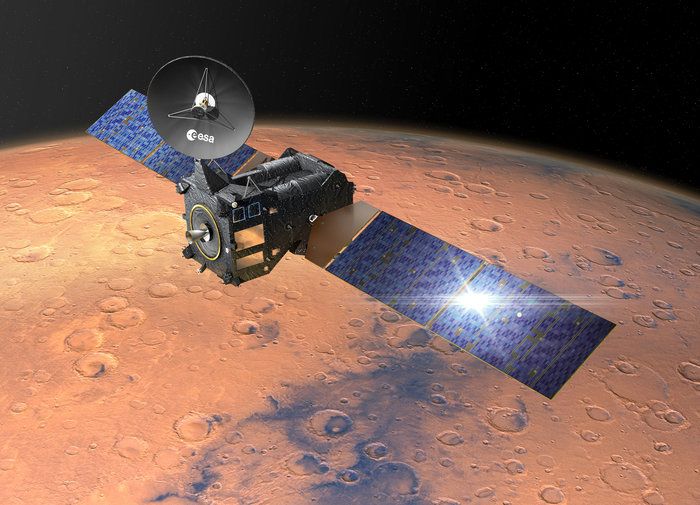
Astronauts Going to Mars Will Absorb Crazy Amounts of Radiation. Now We Know How Much.
New Mars radiation measurements underline how dangerous humans would find the journey.
After completing an intimate and deeply personal recording for the latest Space Café Podcast, Professor Luciano Iess—one of the key figures behind the legendary Cassini-Huygens mission—leaned back and, almost as an afterthought, shared this striking remark:
"You know, any Mars mission today is still doomed. The radiation problem isn’t remotely solved."
Interesting, I thought.
Iess isn’t just any scientist—he’s one of the minds behind Cassini, Juno, and some of the most precise planetary measurements ever made. If anyone understands the physics of interplanetary travel, it’s him. And according to Iess, the single biggest challenge for a Mars mission isn’t fuel, propulsion, or life support… it’s radiation.
For a year-long round-trip to Mars, astronauts would face cosmic rays and solar radiation at levels far beyond anything human biology has ever endured. Without a major breakthrough, Iess estimates that a Mars mission could carry a mortality rate of up to 50%.
Sure, there are ideas on the table—denser spacecraft shielding, underground habitats, even bioengineering for radiation resistance—but right now, these remain just that: ideas.

I always marvel, how compared to the size of the universe, light speed really isn’t even that fast. Heck leave earth at the speed of light, it would still take almost an hour and a half to get to Saturn. The distances are truly incomprehensible to me.An unrelated space tidbit. Sometime around November of this year Voyager 1 will reach 1 light day from Earth. Only took 49 years. Alpha Centauri is 4.3 light years away.
In terms of space travel Voyager 1 hasn't even finished backing out of the driveway
We have satellites there now.I'm not sure the moon has the ability to keep a satellite in orbit.
https://www.nasa.gov/general/does-anything-orbit-the-moon-we-asked-a-nasa-technologist/

Cyclonepride
Thought Police

An unrelated space tidbit. Sometime around November of this year Voyager 1 will reach 1 light day from Earth. Only took 49 years. Alpha Centauri is 4.3 light years away.
In terms of space travel Voyager 1 hasn't even finished backing out of the driveway
72,148 more years and Voyeger could get to Alpha Centauri!
Space is wild.
From Earth's point of view it would take that long. From the point of view of the travelers they'd arrive instantly.I always marvel, how compared to the size of the universe, light speed really isn’t even that fast. Heck leave earth at the speed of light, it would still take almost an hour and a half to get to Saturn. The distances are truly incomprehensible to me.

An unrelated space tidbit. Sometime around November of this year Voyager 1 will reach 1 light day from Earth. Only took 49 years. Alpha Centauri is 4.3 light years away.
In terms of space travel Voyager 1 hasn't even finished backing out of the driveway
I recently just geeked out to Voyager 1 and 2....and absolutely am mind blown that they're still traveling away from earth and we can still somewhat communicate with them (even if it takes 23 hours at a time). To be able to track/locate and talk to something that's nearly a light day away is incredible.
Read somewhere that Voyager 1 is now beyond the influence of our sun as well.

I recently just geeked out to Voyager 1 and 2....and absolutely am mind blown that they're still traveling away from earth and we can still somewhat communicate with them (even if it takes 23 hours at a time). To be able to track/locate and talk to something that's nearly a light day away is incredible.
Read somewhere that Voyager 1 is now beyond the influence of our sun as well.
Only 244 years until it winds up here:

Just about a half hour from breaking the Apollo record. NASA is live on Youtube right now.

Kind of interesting to sense the astronauts being tense to make sure they have everything set up correctly to capture all of the pictures. Really makes you realize no matter how much you prepare you will always be worried about that type of stuff.


