Realignment Megathread (All The Moves)

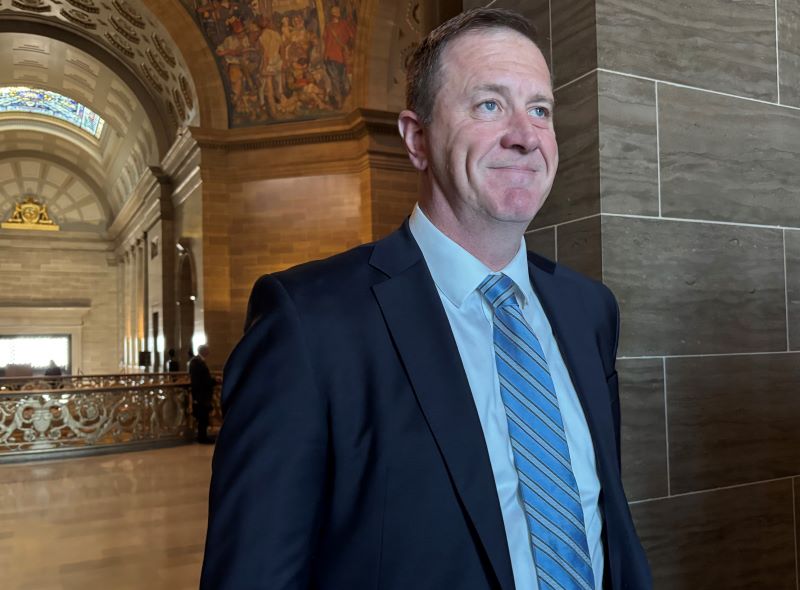
Missouri Senator Schmitt talked with a reporter on the Cruz bill he co sponsored. His point on media pooling: he said the bill would extend anti trust exemptions to pooling of media rights for college football. That was the purpose of the1961 broadcasting act to give protections to professional sports for pooling. He also said that NBA had half the audience as college football but double the media revenue. He said just as it is silly for the AFC West to negotiate its own deal, it is silly the way conferences bid their own rights. He said it is voluntary and a way for colleges to get additional revenue for Olympic sports.
 
And there is it...he doesn't support the bill because it doesn't meet his virtue signalling requirement for paying economically-baseless loads of cash to college athletes. He's not alone though...other media talking heads and posters in this thread have brought up the same thing. IMO, the virtue signalling is what will kill the bill, rather than the actual merits of what the bill proposes to do.

Quite often, college coaches who end up getting "blockbuster" salaries get those in part because they are getting looks by the professional leagues, and those looks (whether just rumored or actual) are putting upward pressure on the salary bidding war. So, the salary has at least some basis in real economic market value.

Is that the same case in college sports now, where "Daddy Warbucks" donors pile money into NIL collectives so their favorite college can buy teams? Maybe in a few cases, but in my opinion, usually not. Milan Momcilovic is a great example of this. Outside of the artificially-created college eco-system, is MM worth $ 6 million a year? Was any other basketball league willing to pay him that money?

I think in the college sports eco-system, the vast majority of the risk is taken by the schools. They have to take the loans to build the facilities, they have to pay salaries to keep coaches out of the pro leagues, they have to provide food, medical, housing, tutoring, transportation etc. to the athletes. Seems fair to me that if you take the majority of the risk, you should get the majority of the compensation. And it is certainly debateable whether the risks taken by the colleges are wise and actually within the scope of the mission of the college...like building 100,000 seat stadiums and paying coaches $10,000,000/yr. I don't think the way to control outlandish spending by college ADs is to pay artificially-inflated salaries to college athletes.

I asked google whether it was riskier to play college sports or to go for drive in a car...the answer could be totally wrong, or maybe it isn't...

Driving a car presents a significantly higher risk of serious injury or fatality than playing college sports. According to the National Highway Traffic Safety Administration and the National Safety Council, car accidents cause millions of injuries and tens of thousands of deaths every year. In contrast, while NCAA sports carry inherent risks, serious catastrophic injuries are rare
Artificial?? The market clearly says these athletes are not fungible.

This can be debated for years.

Perfection is the enemy of good. They have to give up on settling this in the bill. Amend out the labor/employment issue
 
It’s unfortunate that labor politics is such a big part of the bill

But we can all laugh at Nick Saban thinking it’s just now an arms race or worrying about it becoming about which team spends more.


probably a better argument than needing to keep up with China

Just how many transfers are injured??

Or are they talking about the players that get encouraged into portal, historically a bigger number, that no longer get as good of treatment or physical development

I’m glad I don’t need to provide evidence of my next job having adequate gyms and doctors before allowed to accept raise

It’s the only option, so we have to support it as a conference and fans, but the bill is politically not well crafted, and the advocates for it stepping on their dicks

 
Last edited:
Notice all the gobble gook that Tony Petitti said in his statement today, still no specifics on what the Big 10 wants. What an entitled idiot.
 
Is this the only issue in America right now that kind of runs a jagged line through party politics? Seems like there are going to be a fair amount for republicans and democrats both for and against this bill.
 
  • Agree
Reactions: Kinch
I've asked the same thing many times myself and no one can give an answer. Why is it so hard to make the athletes employees? Most universities literally have thousands of student employees already.
I’m not smart enough to know the ins and outs with the tax implications, but the the other argument I’ve heard is that employees could unionize. Collective bargaining puts more power in their hands.
 
I’m not smart enough to know the ins and outs with the tax implications, but the the other argument I’ve heard is that employees could unionize. Collective bargaining puts more power in their hands.
Collective bargaining is one of the few ways in which they could get around anti-trust laws. Athlete pay is already spiraling out of control and will eventually threaten every non-revenue college sport, so what are they afraid of at this point?
 
This lawyer crushes Sankey’s arguments, but also speculates that this might be a Bill of Attainder prohibited by the constitution.
Regarding his thoughts on the bill being unconstitutional and the SEC/B10 being targeted, the two entities being potentially harmed and targeted are ESPN and Fox. The SEC and B10 both can double their media revenues and maintain revenue advantages if they played ball.

And "handing enforcement to a private commission of the regulated parties is a Carter v. Carter Coal problem" doesn't make sense given the CSC already handles enforcement under the terms of the legally approved House Settlement. This is assuming the CSC is the private commission being referred to.

And his claim of "Tying Olympic sports protections to a pooling mechanism the SEC and Big Ten can veto is structurally incoherent" is a function of the misaligned media contracts which is a primary driver for making pooling optional in the bill. And pooling optionality counters his claim that the SEC/B10 is being targeted.
 
I’m not smart enough to know the ins and outs with the tax implications, but the the other argument I’ve heard is that employees could unionize. Collective bargaining puts more power in their hands.
Yeah, the vast majority of existing students being paid don't have insurance and other benefits and obviously they don't belong to a union. University expenses will significantly increase with unionization due to paying direct wages, benefits, workers comp and payroll taxes, alongside high compliance costs to manage labor laws. And if implemented without pooling, there will be huge cuts in non-rev sports. But it may have to be the long term solution.
 
Last edited:
  • Like
Reactions: MugNight
Collective bargaining is one of the few ways in which they could get around anti-trust laws. Athlete pay is already spiraling out of control and will eventually threaten every non-revenue college sport, so what are they afraid of at this point?
Why resort to CBAs when you think you can get legislation to just roll the clock back? Put in caps on compensation and player transfer restrictions. The P2 may not support this bill, but they did want a bill on this.


There was even talk last few weeks about conference CBAs WITHOUT employment status. Wild stuff. Given it is the labor side that decides to CBA, a group of schools telling non employees, without the ability to unionize, the schools want a CBA…lol

I think decades of essentially getting free labor without regard to whether it was constitutional or legal has resulted in everyone being too optimistic/greedy to simply have employment with CBAs
 
  • Like
Reactions: MugNight
Regarding his thoughts on the bill being unconstitutional and the SEC/B10 being targeted, the two entities being potentially harmed and targeted are ESPN and Fox. The SEC and B10 both can double their media revenues and maintain revenue advantages if they played ball.

And "handing enforcement to a private commission of the regulated parties is a Carter v. Carter Coal problem" doesn't make sense given the CSC already handles enforcement under the terms of the legally approved House Settlement. This is assuming the CSC is the private commission being referred to.

And his claim of "Tying Olympic sports protections to a pooling mechanism the SEC and Big Ten can veto is structurally incoherent" is a function of the misaligned media contracts which is a primary driver for making pooling optional in the bill. And pooling optionality counters his claim that the SEC/B10 is being targeted.
Good luck arguing that in court
 
Regarding his thoughts on the bill being unconstitutional and the SEC/B10 being targeted, the two entities being potentially harmed and targeted are ESPN and Fox. The SEC and B10 both can double their media revenues and maintain revenue advantages if they played ball.

And "handing enforcement to a private commission of the regulated parties is a Carter v. Carter Coal problem" doesn't make sense given the CSC already handles enforcement under the terms of the legally approved House Settlement. This is assuming the CSC is the private commission being referred to.

And his claim of "Tying Olympic sports protections to a pooling mechanism the SEC and Big Ten can veto is structurally incoherent" is a function of the misaligned media contracts which is a primary driver for making pooling optional in the bill. And pooling optionality counters his claim that the SEC/B10 is being targeted.
Let me know when the House Settlement survives its first true legal challenge from a current athlete.
 
  • Like
Reactions: FinalFourCy
I've asked the same thing many times myself and no one can give an answer. Why is it so hard to make the athletes employees? Most universities literally have thousands of student employees already.
They opposed it in the past because they thought it would give the athletes a seat at the table on decisions that affected the athletes and the university wanted them to have no say in those decisions. Now the script has been flipped and the schools no longer have the power to the point they had before, and some are starting to realize that making them employees of the university may be the only way to solve a lot of the current problems.

Making them employees would allow them to unionize and we would have collective bargaining, reigning in payments by either a salary scale or some other way to keep NIL costs down. It could also make the athletes sign a contract to play for the school for a certain number of years, thereby cutting down most of the transfers.
 
Cruz articulates it well here. (Super) Pooling isn’t inherently exclusionary. Super league pooling is


Last edited:
They opposed it in the past because they thought it would give the athletes a seat at the table on decisions that affected the athletes and the university wanted them to have no say in those decisions. Now the script has been flipped and the schools no longer have the power to the point they had before, and some are starting to realize that making them employees of the university may be the only way to solve a lot of the current problems.

Making them employees would allow them to unionize and we would have collective bargaining, reigning in payments by either a salary scale or some other way to keep NIL costs down. It could also make the athletes sign a contract to play for the school for a certain number of years, thereby cutting down most of the transfers.

Right, administrators were against employment/CBA because they thought it gave athletes too much power

But then they saw how much power a partial open market gave athletes, and CBAs don’t seem so bad. So did the athletes, which may not want a CBA, which is their call in labor markets

However, let’s first try to get legislation that essentially gives us the old system back. You know, to help save the athletes and keep up with China