When do you think you will buy a 100% pure electric vehicle?

When will you buy a 100% pure electric vehicle?

  • Already Own One

    Votes: 70 8.0%
  • In the next year

    Votes: 7 0.8%
  • Between 1-5 years

    Votes: 161 18.3%
  • 6-10 years

    Votes: 189 21.5%
  • 10+ years or never

    Votes: 452 51.4%

  • Total voters
    879
Last edited:
We test drove the Lexus rz450, liked it but passed. It is noticeably smaller on the interior (or seems that way) than her current Outback. Waiting on the i3, but I suspect it will meet the same fate due to the interior size. On a minor note the dash display is notably outdated on the Lexus too, but that is a non factor for us.
Makes sense on both accounts. The rz450 is a smaller vehicle overall than an Outback, particularly in height. Its definitely a compact SUV. And Lexus infotainment systems always lag behind the rest of the industry. I've always assume they did that for reliability scores (more established tech that is less likely to need repairs) and they use the savings in other areas like soundproofing and interior materials.
 
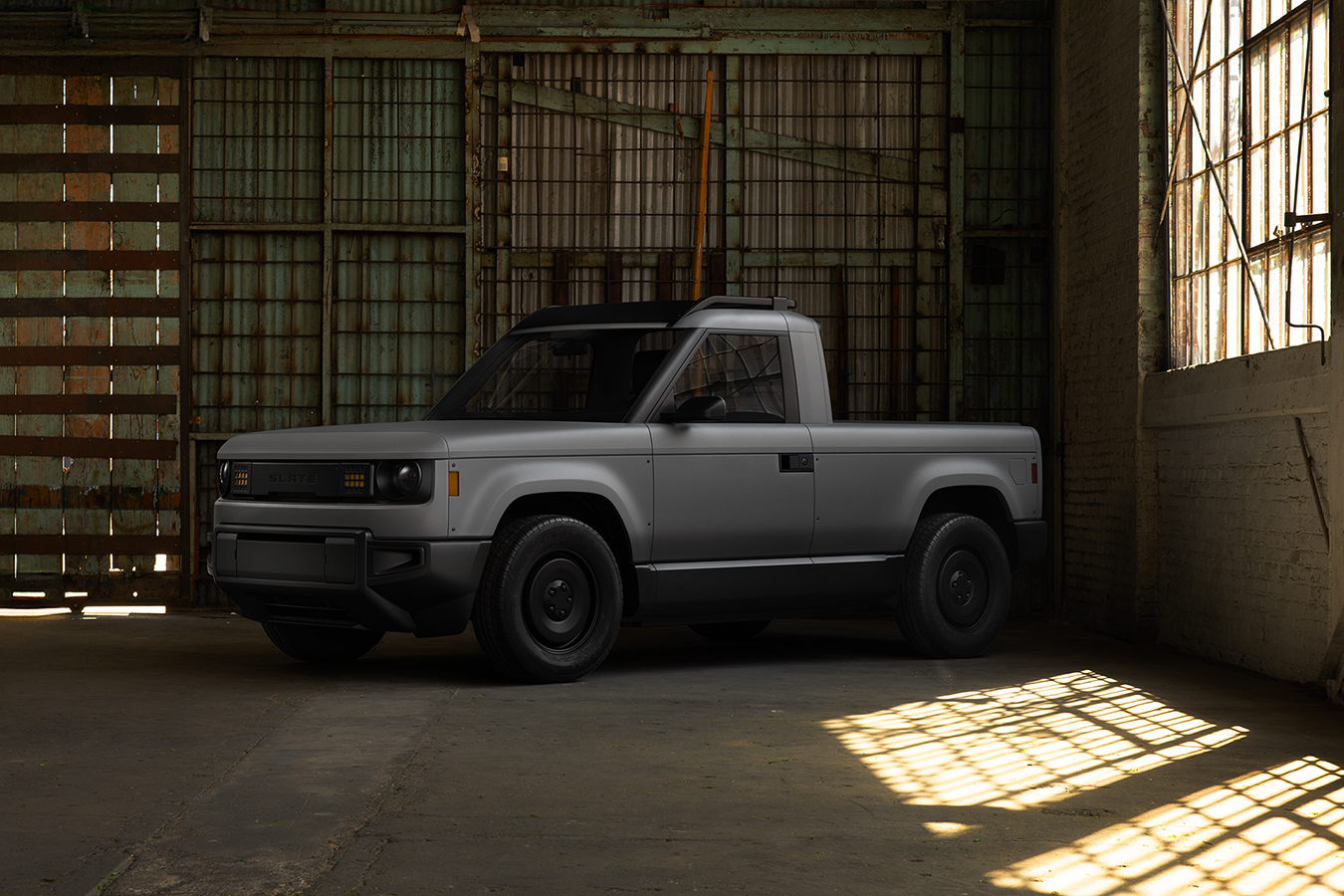
I don't understand why these companies aren't designing an EV version of small size truck like a Ford Maverick. I would think that those would sell crazy well here in the US. Can they just not make it work engineering-wise?
Not quite fully operational but this might be what you are thinking about.

 
I'll be interested to see how much of an uptick there is in EV sales in different parts of the world. I am sure Asia will see an uptick. Europe was already seeing that, wonder if there will be a spike. I'd assume the US seems an increase.

Analysts are calling current oil issues a 'demand destruction event' This means some of the demand will never come back.
 
  • Like
Reactions: VeloClone
I'll be interested to see how much of an uptick there is in EV sales in different parts of the world. I am sure Asia will see an uptick. Europe was already seeing that, wonder if there will be a spike. I'd assume the US seems an increase.

Analysts are calling current oil issues a 'demand destruction event' This means some of the demand will never come back.
I could definitely see it. Those on the fence will use it as the tipping point.

EU and other parts of the world will see a greater uptick due to multiple factors. Mainly being ability to purchase cheaper/high range EVs from China and shorter driving distances which reduces range anxiety.

US will follow, but it will be farther behind.
 
I don't understand why these companies aren't designing an EV version of small size truck like a Ford Maverick. I would think that those would sell crazy well here in the US. Can they just not make it work engineering-wise?
IMO the US auto maker's took a status quo approach to EV development as ICE products. Focus on high priced, higher margin vehicles to be able to financially justify the investment in the EV R&D and new factories. Can't fault them too much.

But with post-covid inflation to vehicle costs and then elimination of Federal Government subsidy that approach is problematic. But agree, with the current rise in gas prices maybe that make US automakers re-look their approach. The oil embargo of 1973? definitely had a go forward impact on auto manufacturing in the US and opened the door for Japanese manufacturers in the US.
 
Just priced out a

2027 iX3 50 xDrive

$67,500

About $10k more than I'd like to spend on this type of vehicle. I was just in Hungray/Austria, and there were advertisements everywhere for these.

 
  • Like
Reactions: FinalFourCy
This current gas price situation has me looking at Rivians again.. If I had any longer commute I'd be a lot closer to pulling the trigger on a '23 or '24. I haven't actually had to put gas in my tundra for a month though so I don't think my total cost of ownership would go down much and with a 2 year old truck I don't really need a new one.
 
  • Like
Reactions: FinalFourCy
This current gas price situation has me looking at Rivians again.. If I had any longer commute I'd be a lot closer to pulling the trigger on a '23 or '24. I haven't actually had to put gas in my tundra for a month though so I don't think my total cost of ownership would go down much and with a 2 year old truck I don't really need a new one.
Really, really good deals on used R1s.
 
Really, really good deals on used R1s.
Yeah that's what I'm seeing too. I can get a '24 R1T with the dual motor large battery and the adventure trim in the low $60k range. That's pretty good for a truck that was close to $90k new. I think it's pretty likely that either my wife or I will get a Rivian as our next vehicle but we're both driving '24s so it doesn't make a lot of sense right now to trade in on a similar model year Rivian, yet.
 
Yeah that's what I'm seeing too. I can get a '24 R1T with the dual motor large battery and the adventure trim in the low $60k range. That's pretty good for a truck that was close to $90k new. I think it's pretty likely that either my wife or I will get a Rivian as our next vehicle but we're both driving '24s so it doesn't make a lot of sense right now to trade in on a similar model year Rivian, yet.
You'll love it. The R1T drives so nice. It's got a bigger wheel base than my R1S and you can tell. It's so buttery smooth.
 
  • Informative
Reactions: NWICY
Freight weight won't be an issue

Tesla’s 500-mile range estimate is based on the truck being fully loaded at its maximum Gross Combined Weight (GCW) of 82,000 lbs
Feature 2026 Freightliner Cascadia (Sleeper) 2026 Tesla Semi (Long Range)
Max Combined Weight 80,000 lbs 82,000 lbs
Tractor Weight (Curb) ~18,000 lbs ~23,000 lbs
Trailer Weight (Empty) ~14,000 lbs ~14,000 lbs
Available Payload ~48,000 lbs ~45,000 lbs

Acceleration: A fully loaded Tesla Semi (82,000 lbs) can go from 0-60 mph in about 20 seconds. A comparable diesel truck often takes 45–60 seconds.
Most trucks are volume limited rather than weight limited. The items being hauled usually aren't dense enough to hit the max payload within a 53' trailer.

The tow ratings have more to do with axle and tire loads, and the resulting loads on the road, than the truck's ability to pull/stop it. The difference between a truck rated for 80k vs 120k is often just number of axles and gearing.
 
Avg annual miles per vehicle is only 12k. Slightly higher per licensed driver because most people end up driving more than one vehicle per year.

State & Urbanized Area Statistics - Our Nation's Highways - 2000 https://share.google/isKPKq8IWd6Q1h3Rq
yeah Im at just over 30k a year on just my work truck alone. Wifes SUV was at around 35k in the 1st year. probably another 10k on my car as a 2nd family vehicle between the 2 of us.
 

Latest posts

Help Support Us

Become a patron